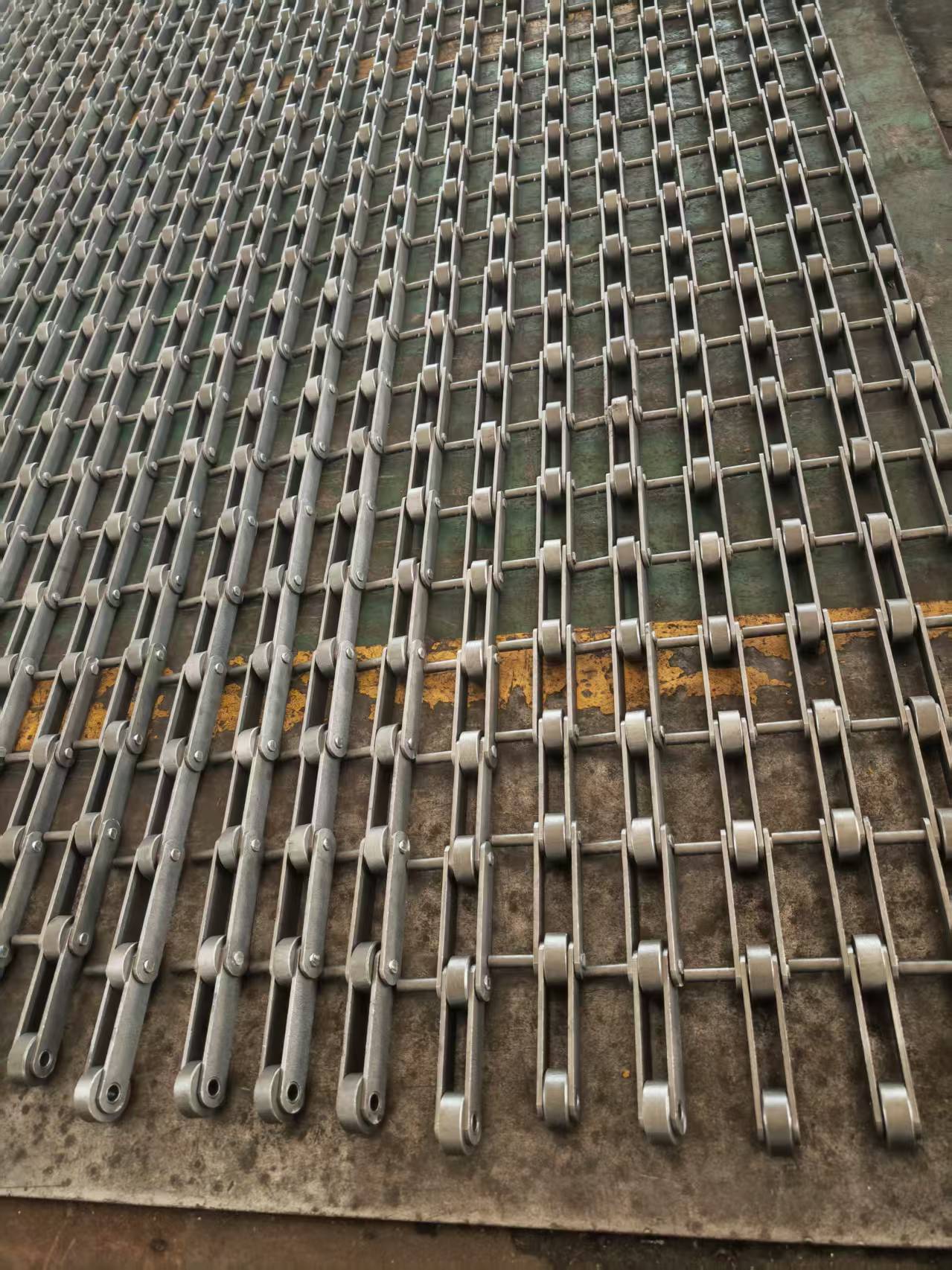
I. Analysis of Causes of Chain Conveyor Belt Deviation
Chain conveyor belt deviation can be attributed to various factors, primarily including:
Improper Installation: Failure to ensure levelness and straightness during installation, leading to deviation during operation.
Roller Issues: Uneven wear on the roller surface or misalignment of roller axes, causing uneven force distribution on both sides of the conveyor belt.
Support Structure Problems: Deformation or instability of the support structure, affecting the normal operation of the conveyor belt.
Uneven Material Distribution: Uneven distribution of materials on the conveyor belt, resulting in uneven force and subsequent deviation.
Insufficient Chain Tension: Inadequate or uneven tension in the chain, preventing stable operation of the conveyor belt.
II. Diagnostic Methods for Chain Conveyor Belt Deviation
Before making adjustments, it is essential to accurately diagnose the location and cause of the deviation:
Visual Observation: Directly observe the deviation during the conveyor belt's operation to identify the approximate location of the issue.
Measurement Method: Use rulers or measurement tools to detect the relative position between the conveyor belt and rollers, identifying any deviations.
Material Tracking Method: Observe the trajectory of materials on the conveyor belt to analyze the cause of deviation.
III. Adjustment Strategies for Chain Conveyor Belt Deviation
To address different causes of deviation, the following adjustment strategies can be employed:
Adjusting Rollers: For deviation caused by roller issues, adjust the position of the rollers or replace them as necessary.
Correcting the Support Structure: For problems with the support structure, reinforce or adjust it to ensure stability.
Ensuring Even Material Distribution: Adjust the material feeding point or use distributors to ensure even material distribution on the conveyor belt.
Adjusting Chain Tension: Use tensioning devices to adjust the tension of the chain, ensuring even force distribution on both sides of the conveyor belt.
Using Self-Aligning Idlers: Install self-aligning idlers in areas with severe deviation to automatically correct the conveyor belt's misalignment.
IV. Precautions for Adjusting Chain Conveyor Belts
During the adjustment process, the following points should be noted:
Safety: Ensure the power is cut off and follow safe operating procedures during adjustments.
Gradual Adjustments: Adjustments should be made gradually to avoid damage to the conveyor belt or equipment due to excessive force.
Inspect Components: Check all components for integrity before adjustments to prevent deviation caused by damaged parts.
Record Data: Document data before and after adjustments to analyze the effectiveness and optimize future operations.
V. Maintenance and Prevention for Chain Conveyor Belts
In addition to adjustments, regular maintenance and preventive measures are crucial:
Regular Inspections: Periodically inspect the conveyor belt and related components, addressing any issues promptly.
Cleaning and Maintenance: Keep the conveyor belt and rollers clean to avoid deviation caused by oil stains or material buildup.
Training Operators: Provide training for operators to enhance their understanding and ability to handle conveyor belt deviation issues.
VI. Conclusion
Although chain conveyor belt deviation is a common issue, it can be effectively resolved and prevented through proper diagnosis and adjustment methods. With the advancement of industrial automation and intelligence, future conveyor systems will become smarter, capable of automatically detecting and adjusting deviation issues, further improving production efficiency and safety.
Through the detailed introduction in this article, it is evident that chain conveyor belt deviation is not an unsolvable problem. With scientific diagnosis, reasonable adjustments, and regular maintenance, the stable operation of conveyor systems can be ensured, providing strong support for industrial production.
1. We have strict quality control to ensure the quality of our products.
2. We provide exquisite packaging to protect the products before transportation.
3. A powerful factory with many years of production experience.Steel Conveyor Chain