1. Structural Design Requirements
The structure of conveyor chains must satisfy the three principles of stability, load capacity, and adaptability. For example:
-
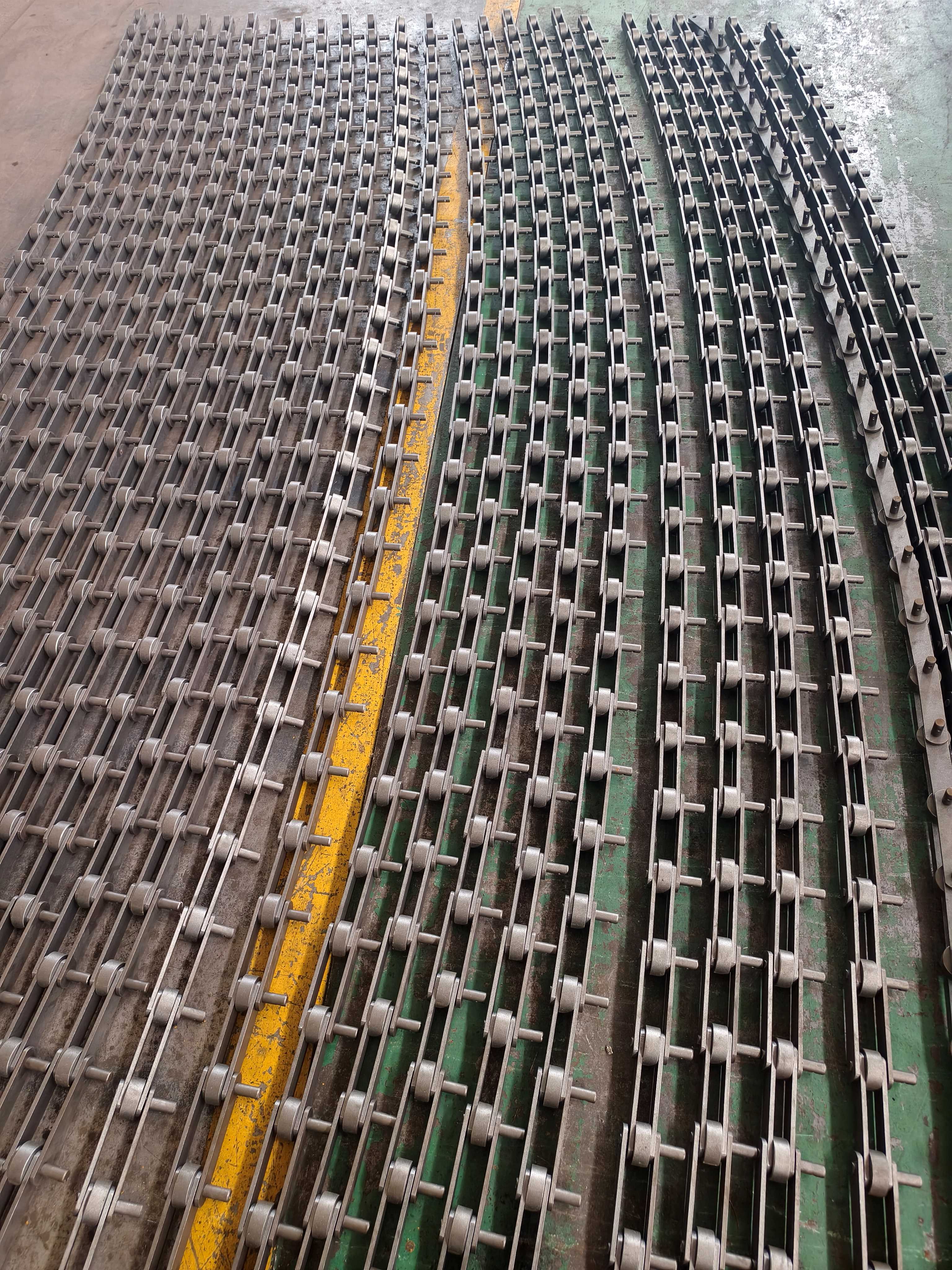
Plate link chains combine high-strength chain plates and rollers, suitable for heavy-load, long-distance conveying scenarios. Their pitch ranges from 38.1mm to 200mm, allowing flexible selection based on equipment needs.
-
Pintle chains enhance impact resistance through their bent chain plate design, often used in harsh working conditions like mining and metallurgy. Their breaking force must reach over 95% of the standard value to ensure reliability.
-
Universal standards (e.g., ISO 1977) and national standards (e.g., GB/T 8350) clearly specify parameters like chain pitch, roller diameter, and chain plate thickness, ensuring interchangeability of products from different manufacturers.
2. Material and Performance Requirements
The material of conveyor chains directly determines their service life and reliability:
-
Carbon Steel & Alloy Steel: Suitable for常规工况, requiring tensile strength ≥400 MPa and surface hardness HRC 58-65.
-
Heat-Resistant Steel & Stainless Steel: Used in high-temperature (>120°C) or corrosive environments, requiring enhanced wear resistance and fatigue performance through heat treatment.
-
Taking the common scraper chain in grain and oil machinery as an example, the chain must possess anti-rust capability, and the chain rod material should use 45# steel with quenching and tempering treatment, with hardness controlled between 217 HB and 255 HB.
3. Manufacturing Process and Inspection Standards
From raw material to finished product, the manufacturing of conveyor chains must follow strict processes:
-
Heat Treatment: Enhances the strength of chain plates and pins through quenching and tempering. The case depth after hardening should be ≥1.0mm (for a 14mm specification chain).
-
Welding Process: Welds between scrapers and chain rods must be free of cracks and slag inclusions, with strength not less than 400 MPa, complying with the GB/T 985.1 groove standard.
-
Dimensional Tolerances: The total length deviation of the chain needs to be controlled within 0.04%-0.05% (e.g., deviation ≤12mm for multi-strand synchronous conveying).
-
Pre-delivery inspection must include visual inspection, tensile testing, and dynamic load testing to ensure breaking force and fatigue life meet standards.
Technical Points of Special Type Conveyor Chains
1. Application and Selection of Plate Link Chains
Plate link chains are characterized by large pitch and high load capacity, commonly used for heavy-duty material conveying:
-
Structural Features: Chain plate width is available from 200mm to 315mm. The roller outer diameter needs to be greater than the chain plate height to achieve stable rolling.
-
Application Scenarios: Such as clinker conveying in the cement industry and automotive manufacturing lines. Their safety factor needs to be ≥4 (for non-hazardous materials) or ≥6 (for hazardous materials).
2. Impact-Resistant Design of Pintle Chains
Pintle chains disperse stress through the bent link design, suitable for high impact loads:
-
Performance Advantages: Maintain high wear resistance even in dusty and humid environments. Breaking force can reach 1,780 kN (for 60mm specification).
-
Installation Requirements: Ensure the parallelism deviation between the chain and sprocket is ≤2mm to avoid vibration or chain jumping during operation.
Installation and Maintenance Specifications for Conveyor Chains
1. Installation Technical Requirements
-
Sprocket Alignment: The horizontal deviation between the drive sprocket and the tension sprocket needs to be ≤0.5mm/m. For multi-strand drives, the length deviation of each chain should be ≤0.05%.
-
Lubrication Management: Lithium-based grease is recommended. Heat-resistant lubricants are required for high-temperature environments. Lubrication frequency should be adjusted according to operating speed (e.g., every 8 hours for low-speed chains).
2. Daily Maintenance Points
-
Wear Monitoring: Regularly measure the chain elongation rate. Replace promptly if it exceeds 0.75% of the standard value.
-
Cleaning Management: Clean oil stains and iron chips from the chain surface to avoid accelerated wear.
-
Taking the en-masse conveyor chain as an example, the design life should be ≥8,000 hours, with the damage rate controlled within 1%. The condition of pins and rollers must be inspected carefully every quarter.
Conclusion: Choosing an Experienced Manufacturer Ensures Stable Operation of the Conveying System
The selection and application of conveyor chains is a systematic project involving multiple links such as materials, processes, installation, and maintenance. As a manufacturer deeply rooted in the chain drive field for many years, Donghu consistently adheres to high standards and strict requirements, providing full life-cycle services from design consultation to after-sales support. Whether for plate link chains, pintle chains, or customized special chains, we can provide systematic solutions tailored to your specific working conditions.
Choosing Donghu means not just selecting a product, but choosing a guarantee of reliability and efficiency. Let's work together to inject lasting power into your conveying system!