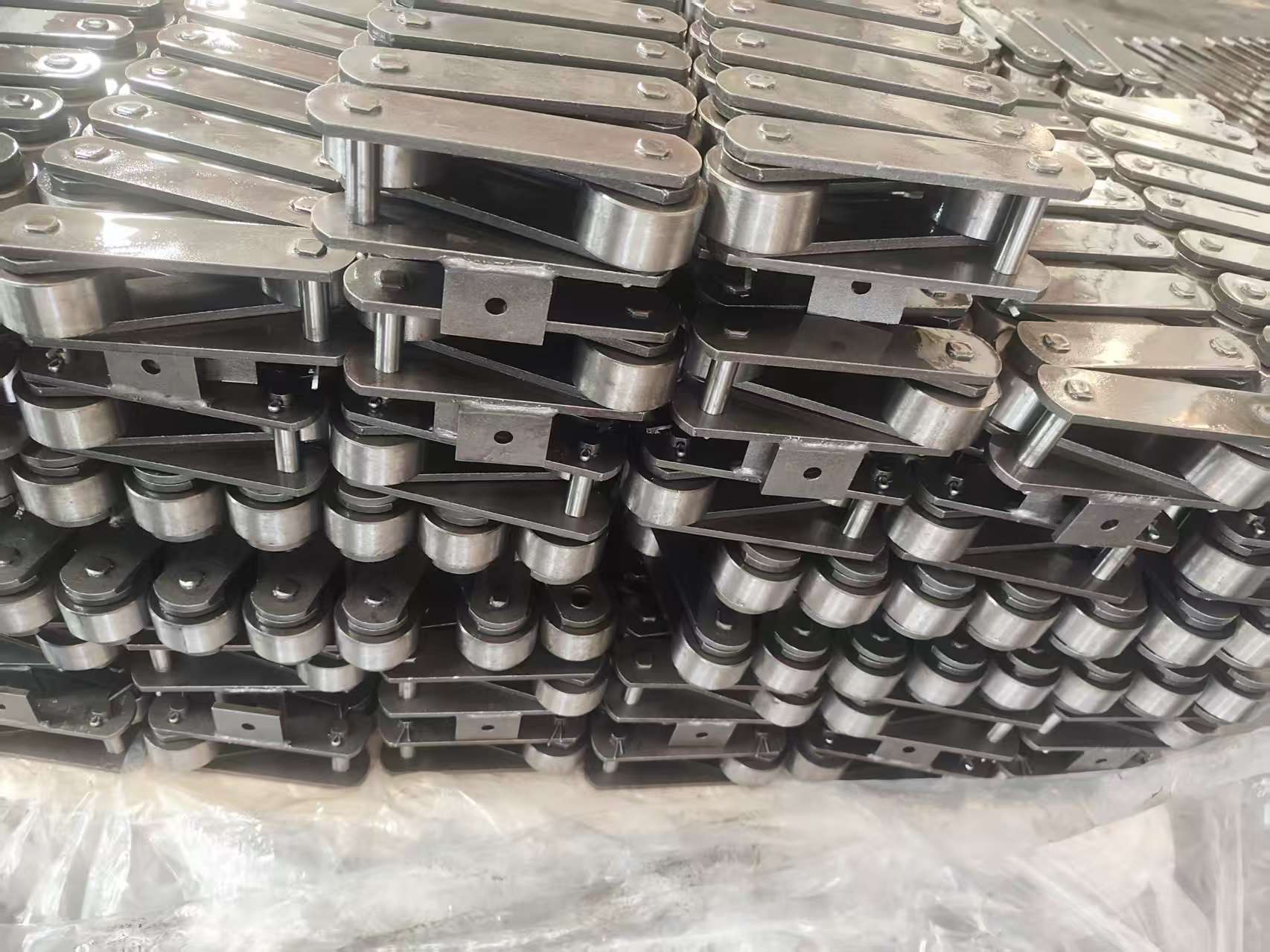
During the welding and overall winding processes of conveyor chains, the presence of grease may seem suitable. However, even the use of mild alkalis or acids to remove it may not fully resolve surface saturation issues.
The surface layer of conveyor chains can adhere to organic residues. In the presence of moisture and oxygen, these residues may form compounds such as sodium citrate, which can cause long-term corrosion on the surface of metal composites. Additionally, the surface layer may contain acidic, alkaline, or phosphate compounds, leading to localized corrosion.
In polluted air, when condensation occurs, liquid droplets containing sulfuric acid, sodium cyanide, or glacial acetic acid may form, resulting in chemical corrosion.
During the installation of conveyor chain equipment, attention must be paid to proper methods. Generally, due to variations in roller bearing types and fitting specifications, we often observe shaft rotation, which means transitions can be achieved using internal threads or both sides. When both sides rotate, transitional cooperation should be implemented on both ends.
1. We have strict quality control to ensure the quality of our products.
2. We provide exquisite packaging to protect the products before transportation.
3. A powerful factory with many years of production experience.Steel Conveyor Chain