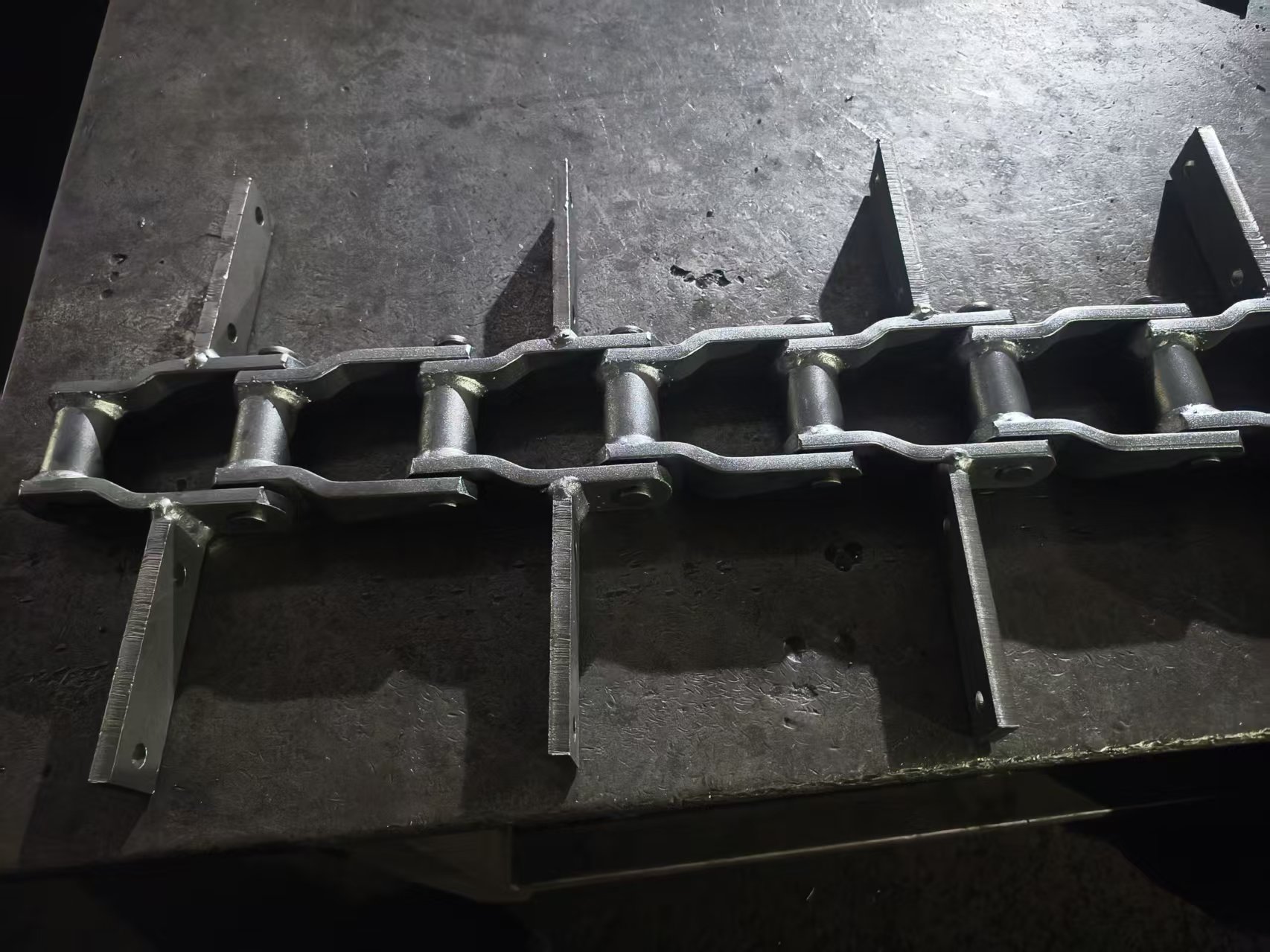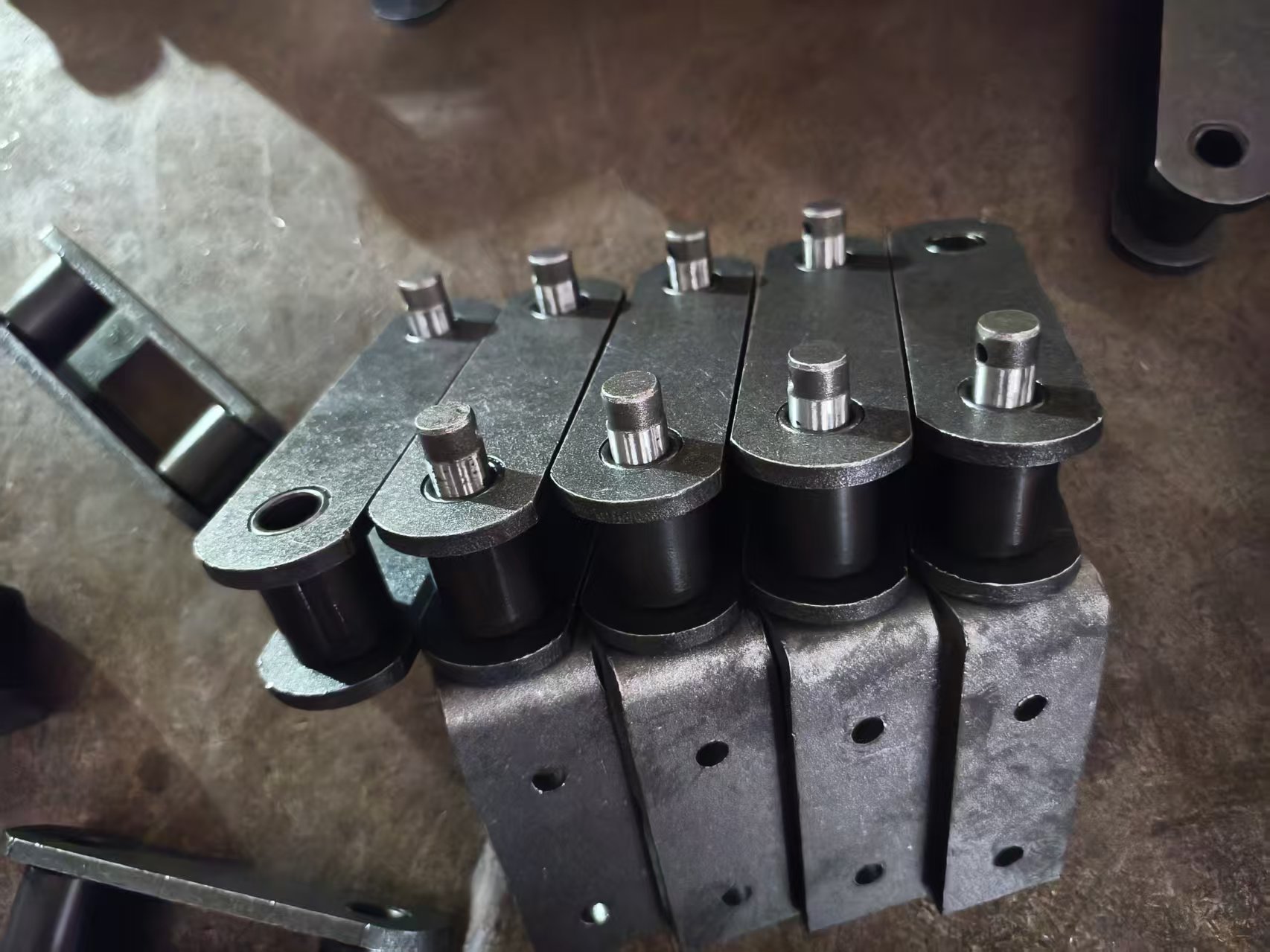
First, if any fixtures connecting two or more chains—such as slats, wear strips, buckets, etc.—are present, remove them (unless there is sufficient spacing between the chains). Then, disconnect the chains at the tension end by removing the outer links or connecting links as needed.
Next, if possible, use the original connecting links to attach a manageable length of the new chain to the old chain. Ensure the chain is oriented correctly. New fixtures should be installed on the new chain, or old fixtures should be reattached, making sure the chain passes through the center.
Afterward, use the drive mechanism to gradually run the new chain into position while the old chain is gradually lowered and removed.
Once the new industrial conveyor chain has been fed onto the conveyor, connect the next manageable section, this time using new connecting links. Simultaneously, disconnect the old chain from the lower strand. Repeat this process until all the chains have been replaced.
Once this is done, the new industrial conveyor chain is successfully installed and ready for operation. It is important to note that old and new chains should not be used together. If one chain needs replacement, it is best to replace all of them to avoid future complications.
1. We have strict quality control to ensure the quality of our products.
2. We provide exquisite packaging to protect the products before transportation.
3. A powerful factory with many years of production experience.Steel Conveyor Chain